Genesis 1
1In the beginning God created the heavens and the earth.
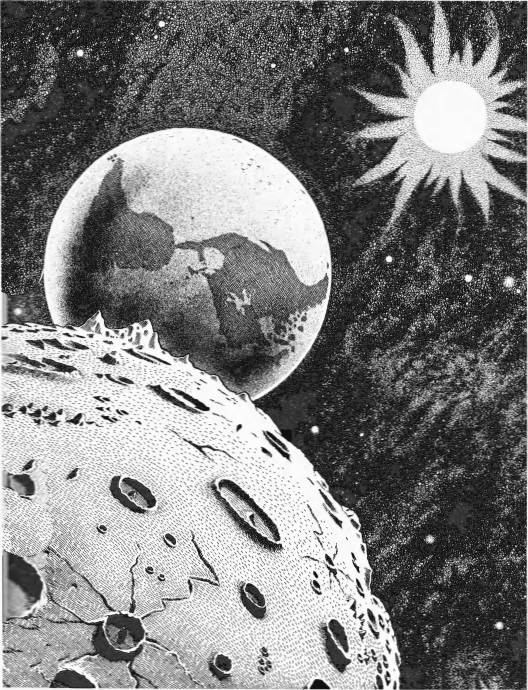
2Now the earth was formless and void, and darkness was over the surface of the deep. And the Spirit of God was hovering over the surface of the waters.
Genesis 1:2 Commentary
Something Happened Between Genesis 1:1 and 1:2:
Now the scene shifts, and read closely; it raises a real question. The earth is “formless and void,” which in Hebrew is tohu va-vohu. Yet thousands of years later, the prophet Isaiah states plainly that God did not create the earth tohu, empty and wasted — He formed it to be inhabited (Isaiah 45:18). Clearly, a massive disruption occurred between those two verses.
The Earth "Became" Formless and Void (Hayah):
The Hebrew word translated “was” is hayah, and can be honestly translated as “became.” Read it that way and the earth didn’t start out a chaotic mess; it “became” one. Writing to the Corinthians millennia later, Paul states plainly that God is not the author of confusion (1 Corinthians 14:33), yet confusion is exactly what Genesis 1:2 describes. That’s not how God leaves anything when He’s finished with it. Something wrecked what He’d already made — and water, already present in verse 2 (Genesis 1:2), fits a recreation following a catastrophe far better than one smooth, uninterrupted act.
Satan’s Rebellion Occurred in Eden, Not Before Genesis 1:2:
While older tradition often blamed the ruin of Genesis 1:2 on a prehistoric rebellion of Satan, Scripture nowhere makes that claim. When the prophet Ezekiel pulls back the veil thousands of years later from exile in Babylon (Ezekiel 28:13–15), the anointed guardian cherub is described as blameless in Eden — until iniquity was found in him right there on God’s holy mountain. Prior to Eden, there is no biblical record or logical inference that Satan had yet rebelled. Nor does the Apostle John’s apocalyptic vision millennia later in Revelation 12 describe an ancient pre-Adamic eviction: the dragon sweeping a third of the stars to the earth (Revelation 12:4) is tied all the way forward to the birth of the Messiah. At some unknown point between Eden and the incarnation — whether early on or gradually over hundreds or even thousands of years — Satan successfully convinced a third of the angelic host to stand in opposition to YAHWEH, eventually deploying them in an earthly campaign to destroy Yeshua at His birth (influencing earthly rulers like Herod).
The Earth’s Pre-Adamic Ruin Remains an Unrevealed Mystery:
Meanwhile, looking all the way to the apocalyptic climax in the New Testament, the actual war in heaven where Michael the archangel permanently casts Satan down (Revelation 12:7–9; Jude 1:9) takes place during the end times. Until then, Satan still maintains access to the heavenly council to accuse believers, just as the ancient book of Job reveals. What catastrophe caused the original earth to fall into that desolate ruin remains an unrevealed mystery of the unseen world. The geological and fossil records attest to an era of creatures like dinosaurs and Neanderthals, but what caused that world to perish is simply not disclosed in the text.
The Spirit of God Hovered Over the Ruin:
The Hebrew word for “Spirit” is ruach, meaning wind, breath, or spirit — already at work, already moving to bring order out of chaos. Before God speaks a single word of command, His Spirit, His power, is already present, already hovering, already preparing the way forward.
Scripture Never Says How Long That Gap Actually Lasted:
Scripture never gives a number, and anyone who tells you it lasted exactly so many years is speculating past what’s written. It could have been days. It could have been billions of years — nothing in the text rules either one out, and an old, ruined earth sitting beneath a young, literal creation week is not a contradiction. Hold that thought, because it matters for what’s coming: the six days that follow describe a re-creation, not the original moment matter itself came into being back in verse 1 (Genesis 1:1).
Job 38 Proves the Angels Existed Long Before Day One:
Scripture makes it clear that the angels were created before the earth was formed, long before the six days began. In the ancient book of Job, God challenges the patriarch directly from the whirlwind (Job 38:4–7): “Where were you when I laid the foundations of the earth… while the morning stars sang together and all the sons of God shouted for joy?” “Sons of God” is the same phrase Scripture uses elsewhere for angelic beings — as seen in Job 1:6 when “the sons of God came to present themselves before YAHWEH, and Satan also came with them,” a scene repeated in Job 2:1 — and they were already capable of song and joy when the earth's foundation was first laid. That places their creation before the earth was formed, completely separate from any recreation — standing ready well before Day One’s “let there be light” is ever spoken.
The Gap Leaves Room for the Fossil Record:
An unspecified time interval easily accommodates older hominid remains like Neanderthals without putting Genesis in competition with geology. These were creatures that may have shared a similar physical appearance — perhaps a likeness (demuth) — with the form God would later give Adam, but they were not made in God's image (tzelem) and held no divine representation on earth as mankind does. They never received the spirit of man breathed specifically into Adam as we will see just ahead in Genesis 2:7—no divine image, no indwelling spirit that turns a brain into a mind, and never with the chance to inherit eternal life.
3And God said, “Let there be light,” and there was light. 4And God saw that the light was good, and He separated the light from the darkness. 5God called the light “day,” and the darkness He called “night.” And there was evening, and there was morning—the first day.
Genesis 1:3–5 Commentary
“Evening and Morning” Points to a Literal Week:
Darkness covers the earth, and on Day One, God causes light to break through — light He calls "day," darkness He calls "night." Then comes the rhythmic refrain that carries the whole chapter in Genesis 1:5: "And there was evening, and there was morning — the first day." It repeats, day after day, reading as an ordinary literal week, not a poetic stand-in for long evolutionary ages.
6And God said, “Let there be an expanse between the waters, to separate the waters from the waters.” 7So God made the expanse and separated the waters beneath it from the waters above. And it was so. 8God called the expanse “sky.” And there was evening, and there was morning—the second day.
Genesis 1:6–8 Commentary
Day Two — The Firmament Divides the Waters:
Day Two introduces the “expanse” (traditionally called the “firmament”), in Hebrew raqia, opening up breathable atmosphere between the waters above and below. Thousands of years later by the River Chebar, the prophet Ezekiel would use this exact same word for an expanse shining like crystal, stretched out above the four living creatures beneath God’s throne (Ezekiel 1:22). Some take those waters above to be a pre-Flood vapor canopy that wrapped the earth until over a thousand years later when the heavens opened in the Great Flood of Genesis 7:11 — an intriguing theory, but Scripture never confirms it.
9And God said, “Let the waters under the sky be gathered into one place, so that the dry land may appear.” And it was so. 10God called the dry land “earth,” and the gathering of waters He called “seas.” And God saw that it was good.
11Then God said, “Let the earth bring forth vegetation: seed-bearing plants and fruit trees, each bearing fruit with seed according to its kind.” And it was so. 12The earth produced vegetation: seed-bearing plants according to their kinds and trees bearing fruit with seed according to their kinds. And God saw that it was good.
13And there was evening, and there was morning—the third day.
Genesis 1:9–13 Commentary
Day Three — Waters Gathered, Dry Land Appears:
The command gathering the waters exposes an obvious reality: they hadn’t been gathered before. They were sloshing across the entire globe, still unsettled from the cosmic ruin described back in verse 2 (Genesis 1:2).
14And God said, “Let there be lights in the expanse of the sky to distinguish between the day and the night, and let them be signs to mark the seasons and days and years. 15And let them serve as lights in the expanse of the sky to shine upon the earth.” And it was so.
16God made two great lights: the greater light to rule the day and the lesser light to rule the night. And He made the stars as well.
17God set these lights in the expanse of the sky to shine upon the earth, 18to preside over the day and the night, and to separate the light from the darkness. And God saw that it was good.
19And there was evening, and there was morning—the fourth day.
Genesis 1:14–19 Commentary
Day Four’s Lights Track God’s Sacred Calendar:
Day Four isn’t filler material tucked between the more dramatic days. God hangs the sun, moon, and stars in the sky for a specific job, and that job is timekeeping — His timekeeping, not man’s. The text says the lights exist “for signs and for seasons, and for days and years.” “Signs” in Hebrew is oth, the very word God would deliver over two millennia later at Mount Sinai in Exodus 31:13 for the Sabbath, establishing it as a perpetual sign between Him and His people forever. The heavenly bodies were appointed from the first week of creation to track God’s calendar, Sabbaths and Holy Days included. “Seasons” in Hebrew is mo'edim, the identical term Moses would record at Sinai in Leviticus 23:2 for God’s appointed Feasts — the very “appointed times” that would structure Israel’s entire worship calendar.
“Made” and “Created” Have Two Different Hebrew Meanings:
Here the text says God “made” the sun and moon. The Hebrew word is asah, meaning fashioned from existing material — not bara, meaning created from nothing, the word used back in Genesis 1:1. That distinction matters: on this day, the sun and moon became visible and fully discernible from earth. They weren’t summoned out of nothing on Day Four; they were revealed.
“Evening and Morning” Before the Sun Appeared:
That distinction also answers a question critics love to raise: how can Genesis describe “evening and morning” on Days One through Three when the sun isn’t mentioned until Day Four? It doesn’t need to be. Remember the ruin from verse 2 (Genesis 1:2) — the earth’s surface was still wrapped in the thick, unsettled water-and-vapor chaos left over from that catastrophe. The sun and moon were already there physically; Genesis 1:1’s “heavens” already included them.
Diffuse Light Governed Days One Through Three:
Enough diffuse light gets through heavy cloud cover for a real day-and-night cycle even when you can’t see the sun’s disc directly — anyone who’s stood under a solid overcast sky at noon knows “light” and “seeing the sun” aren’t the same thing. That is all that a 24-hour cycle requires for the first three days. Day Four is when that cover finally clears, and the sun, moon, and stars snap into focus as sharp, trackable signs for days, seasons, and years — not the moment they came into being, but the moment the sky opened up enough to use them for what God appointed them to do.
Day Four’s Lights Named by Job, Not Pagan Gods:
Notice what Moses calls them. Genesis 1:16 says God made “the greater light” and “the lesser light” — a job description, not a name. The nations around Israel had names for the sun and the moon, and they bowed to them. Moses — who, as Stephen would recount millennia later in the book of Acts (Acts 7:22), was educated in all the wisdom of Egypt where the sun was worshipped as a god — writes a creation account where the sun and moon are mere lamps. Created. Hung in place. Put to work. Over two millennia later on the plains of Moab, Moses in Deuteronomy 4:19 circles back to this, warning Israel not to be pulled into bowing to the sun, the moon, and the stars — “all the host of heaven” — which YAHWEH had apportioned to the other nations. The lights in the sky were never the real issue. Whatever the nations put behind them was.
20And God said, “Let the waters teem with living creatures, and let birds fly above the earth in the open expanse of the sky.” 21So God created the great sea creatures and every living thing that moves, with which the waters teemed according to their kinds, and every winged bird after its kind. And God saw that it was good.
22Then God blessed them and said, “Be fruitful and multiply and fill the waters of the seas, all of you, and let birds multiply on the earth.”
23And there was evening, and there was morning—the fifth day.
Genesis 1:20–23 Commentary
“Soul” in Hebrew — A Living, Breathing Creature:
This passage introduces a Hebrew word worth holding onto. What English translations render as “living creatures” here is nephesh — the exact same word translated as “soul” for Adam just ahead in Genesis 2:7. It is not some ghostly, immortal add-on. Animals and humans both are a living nephesh, and that overlap matters a great deal for how we understand human nature.
24And God said, “Let the earth bring forth living creatures according to their kinds: livestock, land crawlers, and beasts of the earth according to their kinds.” And it was so. 25God made the beasts of the earth according to their kinds, the livestock according to their kinds, and everything that crawls upon the earth according to its kind. And God saw that it was good.
Genesis 1:24–25 Commentary
“After Their Kind” — A Boundary Genesis 6 Breaks:
This verse lays down an unbreakable biological boundary: living things reproduce strictly after their own kind. It's a foundational law running straight through creation — and one that makes the upcoming rebellion several chapters ahead in Genesis 6:2–4 all the more sinister, when the sons of God cross species boundaries to mate with human women.
26Then God said: “Let Us make man in Our image, after Our likeness, to rule over the fish of the sea and the birds of the air, over the livestock, and over all the earth itself, and every creature that crawls upon it.”
Genesis 1:26 Commentary
“Image” and “Likeness” — Two Weighty Hebrew Terms:
When Genesis 1:26 records God saying, "Let Us make man in Our image," this is the Father speaking with the Word — not God addressing an angelic council. In the Hebrew text, "image" is tzelem, while "likeness" is demuth. tzelem leans toward representation, the way a statue or an imprint visibly stands in for the authority it depicts. demuth leans toward resemblance — how we actually appear, the physical form God designed mankind to carry.
Humanity Bears Both Representation and Resemblance:
Put the two together and Genesis is stating something concrete: humanity doesn’t merely symbolize God on earth — we carry something of His actual likeness. Humanity’s value is grounded in this, not in ability, intelligence, or usefulness. We bear both God’s representation and His resemblance, and nothing else in creation is described that way.
Dominion Means Stewardship, Not Exploitation:
Mankind receives dominion over creation in this same passage as caretakers, not owners. Looking all the way to the end of biblical history, the Apostle John in Revelation 11:18 holds God’s judgment in reserve for “those who destroy the earth” — and that initial stewardship is only the beginning of a much bigger plan.
This Physical Creation Is Only Phase One:
Here’s that bigger plan in plain terms: the Almighty always works in stages. In Phase One, He formed a physical people from one man, gave a codified law on stone tablets, granted physical dominion on earth, and the Word became flesh and offered Himself as the sacrifice for our sins. Fast-forward four millennia to the New Covenant era: we’re now in Phase Two, a spiritual creation where He is carving His own character into a spiritual people begotten by Himself, writing His law directly on our hearts through His Spirit (as the writer of Hebrews explains in Hebrews 10:16), preparing us for ultimate dominion over all things — just as Yeshua promised four millennia after Adam in the Sermon on the Mount (Matthew 5:5), “Blessed are the meek, for they will inherit the earth.” The Creator is still creating.
The Divine Family Plan Preceded Creation:
That spiritual transformation isn’t an afterthought bolted onto salvation; it was the master plan from the start. While the uncreated divine Godhead consists of the Father and the Word who became Yeshua, God chose to build a family. Down at the end of the apostolic canon, Revelation 13:8 calls Messiah “the Lamb who was slain” proving that God’s purpose to bring physical sons and daughters into His eternal glory was mapped out before Genesis 1:1 was ever spoken.
Tselem — Humanity as Living Statues of God’s Authority:
When God says, “Let Us make man in Our image, after Our likeness,” the Father and the Word are speaking together in unified counsel. In the ancient world, kings placed statues (“images,” in Hebrew tzelem) of themselves across their realms to show whose land it was; God placed living human beings as His physical representatives on earth to exercise dominion as caretakers on His behalf.
The Divine Family Plan Sparked the Guardian Cherub’s Envy:
But being made in God’s image was far more than a job description — it was the opening invitation to enter the divine family itself. Humans were created mortal from the dust, designed to inherit immortality as a gift at the future resurrection and, as the Apostle Paul would reveal millennia later writing to Rome, be conformed to the image of Yeshua as co-heirs (Romans 8:29). This physical family plan is very likely a primary catalyst that sparked the resentment of the shining guardian cherub in Eden — who, as unveiled thousands of years later by the prophet Isaiah, harbored the prideful ambition to “make myself like the Most High” (Isaiah 14:14), and could not stomach dust-born creatures being crowned with glory, invited into the divine family, and ultimately given authority to judge angels (as the Apostle Paul writes to the Corinthians in 1 Corinthians 6:3).
Bene HaElohim — Angels as Created Sons in Divine Council:
Do not make the family of God an overly rigid, black-and-white concept. In the ancient poetic record of the book of Job (Job 38:4–7), God challenges the patriarch with where he was when the earth’s foundations were laid, while “the morning stars sang together and all the sons of God shouted for joy.” The Hebrew phrase Benei HaElohim (“sons of God”) is literal family language: these spirit beings are God’s created sons, His heavenly household and divine council who existed before Adam was formed from the dirt.
Adopted Human Sons Destined to Reign Over Angels:
But notice the astonishing destiny God planned for humanity. While spirit beings were created as sons to serve, human beings are invited into something far deeper — a glorious destiny the Apostles would define millennia later as full legal adoption (huiothesia) as co-heirs with the Messiah (Romans 8:14–17), becoming part of the inner God family itself as brothers of Yeshua (Hebrews 2:11) and partakers of the divine nature (2 Peter 1:4). The prophetic payoff is staggering: four millennia later, the Apostle Paul would declare in 1 Corinthians 6:3, “Do you not know that we will judge angels?” while Hebrews 2:5 notes that the world to come is not subjected to angels, but to redeemed humanity reigning with Messiah on His throne (Revelation 3:21). The created sons came first, but the adopted sons are destined to inherit the family estate and reign over the nations alongside the Son.
27So God created man in His own image;
in the image of God He created him;
male and female He created them.
28God blessed them and said to them, “Be fruitful and multiply, and fill the earth and subdue it; rule over the fish of the sea and the birds of the air and every creature that crawls upon the earth.”
29Then God said, “Behold, I have given both of you every seed-bearing plant on the face of all the earth, and every tree whose fruit contains seed. They shall be for both of you as food. 30And to every beast of the earth and every bird of the air and every creature that crawls upon the earth—everything that has the breath of life in it—I have given every green plant for food.” And it was so.
31And God looked upon all that He had made, and indeed, it was very good. And there was evening, and there was morning—the sixth day.
Genesis 1:27–31 Commentary
Male and Female — Equal in God’s Image:
This passage makes a point too many readers move past: both sexes share the Creator’s likeness and stand equal in value before Him, whatever different roles Scripture assigns them elsewhere. That equality shows up immediately in what they’re given: the same blessing, the same command to be fruitful, and shared dominion over the creation.
Before Sin, Man’s Diet Was Plants and Fruit:
Mankind receives seed-bearing plants and fruit trees for food — the original menu for this stage of history, not an eternal vegetarian mandate. Generations later, the Flood account in Genesis 7:2–3 explicitly distinguishes clean from unclean animals long before Noah ever picked up a hammer, but in an unfallen world before death entered the picture, both man and beast lived peacefully on vegetation.
“Very Good” Is the Chapter’s Highest Grade:
Then comes the verdict on the whole project: “very good,” not merely “good enough.” Six days of “good” build to a triumphant climax once man is standing in the garden. And that verdict settles something popular tradition gets wrong. Tradition imagines that Satan rebelled before the Creation Week of Genesis 1 and took a third of the angels with him before man was ever created. But at the close of creation, God looked at everything He had made and declared it “very good” (Genesis 1:31)—not a cosmos already fractured by angelic war — and Job 38:7 records that all the sons of God and morning stars shouted for joy together at the earth’s founding.
Genesis 1:1 Commentary
YAHWEH — The Uncreated Elohim Among Spirit Beings:
Right out of the gate, Genesis hands us a linguistic truth that establishes the entire biblical worldview: the Hebrew word translated “God” here is Elohim. Following the proper biblical definition, Elohim is a category word for any disembodied resident of the spiritual realm — as revealed down the corridor of biblical history, it is applied not only to YAHWEH Himself, but to created spirit beings like the heavenly host in the book of Job (Job 38:7), to territorial rulers and demons (Deuteronomy 32:17; Psalm 82:1), and even millennia later to the disembodied human spirit of Samuel (1 Samuel 28:13). But there is an infinite divide within that category: there are many elohim, but only YAHWEH is the UNCREATED Elohim.
One Divine Family Name — Father and Word as Creator:
YAHWEH is the divine family Name shared by two uncreated Persons: the Father (the unseen Most High on the throne) and the Word — whom the Apostle John would reveal millennia later as the One face to face with God, through whom all things were made (John 1:1–3). As the Apostle Paul would hammer home millennia later in his letter to the Colossians, all other elohim are created spirit beings, brought into existence by the sovereign power of the Word. Paired with Elohim in Genesis 1:1 is the verb “created,” in Hebrew bara, which is singular. That is not sloppy grammar: it points directly to the uncreated Godhead — the Father and the Word acting in complete unity as the sole Creator of all that exists.
The Three Distinct Meanings of “Heavens”:
The Hebrew word is plural, and depending on context it can mean any of three things: the sky, outer space, or God’s own dwelling place — what the Apostle Paul would millennia later designate as the “third heaven” in 2 Corinthians 12:2, recounting a man “caught up to the third heaven,” unsure himself “whether in the body or out of it” — a vision of being caught up into the spiritual domain itself. Genesis 1:30 uses this same Hebrew word for “birds of the heavens” (as the ESV renders it, translated “birds of the air” in the MSB), where it plainly means the sky. Context decides the meaning every time this word appears; it doesn’t carry the same sense twice in a row by default.
John 1 Names the Word as the Actual Creator:
Fast-forward millennia to the Apostolic Scriptures, where the Apostle John in John 1:1–3 fills in the rest of the picture: “In the beginning was the Word, and the Word was with God, and the Word was God… Through Him all things were made, and without Him nothing was made that has been made.” The Father created everything through the Word, who would later become Yeshua the Messiah — and the Word did the actual work of creating. He wasn’t standing by while it happened. The Messiah is our Creator, working in perfect unity with the Father, a truth that begins right here in Genesis 1:1, long before it’s spelled out in full.
“Heavens and Earth” Covers the Unseen Realm Too:
Genesis 1:1 isn’t only about stars and dirt. “The heavens and the earth” is the Hebrew way of saying everything, and everything includes what you can’t see. Millennia later, the Apostle Paul spells it out in Colossians 1:16, writing that all things were created through the Word, “visible and invisible, whether thrones or dominions or rulers or authorities.” Those aren’t furniture words — they’re rank, the vocabulary of spirit beings who govern and serve. Every one of them was made by the same Creator, through the same Word, and every one of them answers to Him. Keep that in your back pocket, because Scripture is going to introduce a lot of unseen rulers, and not one of them is self-made.