Genesis 21
1Now YAHWEH attended to Sarah as He had said, and YAHWEH did for Sarah what He had promised. 2So Sarah conceived and bore a son to Abraham in his old age, at the very time God had promised.
3And Abraham gave the name Isaac to the son Sarah bore to him. 4When his son Isaac was eight days old, Abraham circumcised him, as God had commanded him.
5Abraham was a hundred years old when his son Isaac was born to him.
6Then Sarah said, “God has made me laugh, and everyone who hears of this will laugh with me.” 7She added, “Who would have told Abraham that Sarah would nurse children? Yet I have borne him a son in his old age.”
Genesis 21:5–7 Commentary
The Math Confirms It — Sarah Is About Ninety:
Abraham is a hundred years old at Isaac’s birth, which places Sarah at approximately ninety to ninety-one years old, exactly as the earlier promise required.
Isaac’s Name — From Disbelief to Pure Joy:
Sarah declares, “God has made me laugh, and everyone who hears of this will laugh with me.” His name, meaning “laughter,” now carries a lasting double meaning: the initial laughter of disbelief heard earlier from Abraham (Genesis 17:17) and Sarah (Genesis 18:12), now transformed into the laughter of pure joy at the promise finally, actually fulfilled.
8So the child grew and was weaned, and Abraham held a great feast on the day Isaac was weaned.
9But Sarah saw that the son whom Hagar the Egyptian had borne to Abraham was mocking her son,
10and she said to Abraham, “Expel the slave woman and her son, for the slave woman’s son will never share in the inheritance with my son Isaac!”
Genesis 21:8–10 Commentary
Ancient Weaning Took Place Years After Birth:
The feast celebrating Isaac’s weaning takes place — an event in the ancient world often occurring around two to three years of age or beyond, meaning real time has passed since Isaac’s birth by the time this scene unfolds. Sarah sees Ishmael, by now likely around sixteen years old, doing something the Hebrew describes with a word that can mean laughing, mocking, or scoffing, aimed at young Isaac. Whatever the exact nature of the mockery, it’s enough to provoke Sarah to decisive action.
The Bitter Harvest of “Helping God Out”:
Human shortcuts five chapters earlier back in Genesis 16 have finally come due. When you jump the gun on the Almighty’s timeline, the temporary fix eventually blows up your entire household.
Paul Calls the Mocking What It Was — Persecution:
Fast-forward two millennia to the apostolic epistles, and Galatians 4:29 tells you exactly how the Apostle Paul read this scene: the son born according to the flesh persecuted the son born according to the Spirit. Paul isn’t inflating the story. The Hebrew word for what Ishmael was doing, metzachek, comes from the same root as the name Yitzchak, Isaac, so the text is almost punning: Ishmael was “Isaac-ing” Isaac, laughing at the laughter child. What looked like teasing at a feast was the first round of a conflict between the flesh and the promise that Paul says is still running.
Sarah’s Demand and Paul’s Two Covenants:
“Cast out this slave woman with her son,” Sarah demands, “for the son of this slave woman shall not be heir with my son Isaac.” Two millennia later, the Apostle Paul takes this exact episode in Galatians 4 and reads it allegorically regarding the Old and New Covenants. In that apostolic discourse, Galatians 4:28 applies Isaac’s identity directly to New Covenant believers: “Now we, brothers, like Isaac, are children of promise,” and in Galatians 4:30 quotes Sarah’s demand here almost word for word: “Cast out the slave woman and her son.” Paul is contrasting bondage under an Old Covenant system, unable on its own to save anyone, with the freedom and promise found through Yeshua under the New Covenant.
11Now this matter distressed Abraham greatly because it concerned his son Ishmael. 12But God said to Abraham: “Do not be distressed about the boy and your maidservant. Listen to everything that Sarah tells you, for through Isaac your offspring will be reckoned.
13But I will also make a nation of the slave woman’s son, because he is your offspring.”
Genesis 21:11–13 Commentary
Covenant Promises Descend Exclusively Through Isaac:
Looking two millennia ahead into the apostolic writings, the author of Hebrews calls that New Covenant “a better covenant, founded on better promises” (Hebrews 8:6), involving a greater High Priest. Using Paul’s epistle to the Galatians to argue that the Law was scrapped misreads the chapter as a whole. This demand deeply distresses Abraham on account of his son, and he appears hesitant here — not exactly the assertive, decisive head of household you might expect in a moment this painful. God tells Abraham to listen to Sarah anyway, confirming that nations will come through both Isaac and Ishmael, though the specific covenant line and the priestly promises will continue exclusively through Isaac.
Family Meltdowns Prove Monogamy Isn’t Optional:
None of this excuses how the household got here in the first place. Every time a patriarch tries to rewrite the one-man, one-woman code — from Abraham here to Jacob later — it yields a brutal harvest of jealousy and domestic warfare.
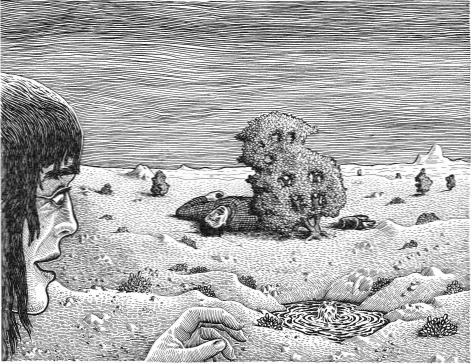
14Early in the morning, Abraham got up, took bread and a skin of water, put them on Hagar’s shoulders, and sent her away with the boy. She left and wandered in the Wilderness of Beersheba. 15When the water in the skin was gone, she left the boy under one of the bushes. 16Then she went off and sat down nearby, about a bowshot away (for she said, “I cannot bear to watch the boy die!”). And as she sat nearby, she lifted up her voice and wept.
17Then God heard the voice of the boy, and the Angel of God called to Hagar from heaven, “What is wrong, Hagar? Do not be afraid, for God has heard the voice of the boy where he lies. 18Get up, lift up the boy, and take him by the hand, for I will make him into a great nation.” 19Then God opened her eyes, and she saw a well of water. So she went and filled the skin with water and gave the boy a drink.
20And God was with the boy, and he grew up and settled in the wilderness and became a great archer. 21And while he was dwelling in the Wilderness of Paran, his mother got a wife for him from the land of Egypt.
Genesis 21:14–21 Commentary
Ishmael’s Name — “God Hears” — Fulfilled Again:
God again promises Ishmael will become a great nation, confirming what He had already promised four chapters earlier back in Genesis 17:20: “I will make him into a great nation.” The boy’s name means “God hears,” and right here in the desert of Beersheba, God heard him.
God’s Mercy Beyond the Covenant Never Runs Dry:
God opens Hagar’s eyes to see a well of water nearby, providing for a boy and mother who stand entirely outside the specific covenant line running through Isaac. Because of Abraham’s standing (Genesis 21:13), God preserves his child — anticipating the exact pattern the Apostle Paul articulates two millennia later in 1 Corinthians 7:14, where a believer’s dedication causes God’s covenant grace to spill over and shield their family.

22At that time Abimelech and Phicol the commander of his army said to Abraham, “God is with you in all that you do. 23Now, therefore, swear to me here before God that you will not deal falsely with me or my children or descendants. Show to me and to the country in which you reside the same kindness that I have shown to you.”
24And Abraham replied, “I swear it.”
Genesis 21:22–24 Commentary
“Abimelech” Is a Dynastic Title, Not a Name:
Abimelech and his commander approach Abraham seeking a formal treaty, and Abraham swears by God’s own name not to deal falsely with Abimelech, his descendants, or his posterity. Five chapters ahead in Genesis 26:26–31, Moses records a later episode in which another man also called Abimelech makes a nearly identical peace covenant, this time with Isaac, which suggests “Abimelech” may function as something closer to a dynastic royal title used by successive kings of Gerar rather than as a single personal name.
Covenant Loyalty and Yeshua’s Standard on Oaths:
When Abimelech asks Abraham to show him the same chesed he has received — a Hebrew word carrying covenant loyalty, steadfast love, mercy, and faithful kindness all at once — Abraham responds by swearing a formal oath. Yet looking ahead two millennia to the Gospels, Messiah’s own instruction in Matthew 5:34–37 (“Do not take an oath at all… let what you say be simply ‘Yes’ or ‘No’”), echoed in the apostolic epistle of James 5:12 (“let your ‘Yes’ be yes, and your ‘No,’ no”), pushes believers under the New Covenant toward a standard of truthfulness so consistent and trustworthy that additional oath-swearing becomes unnecessary in the first place.
25But when Abraham complained to Abimelech about a well that Abimelech’s servants had seized, 26Abimelech replied, “I do not know who has done this. You did not tell me, so I have not heard about it until today.”
27So Abraham brought sheep and cattle and gave them to Abimelech, and the two men made a covenant. 28Abraham separated seven ewe lambs from the flock, 29and Abimelech asked him, “Why have you set apart these seven ewe lambs?”
30He replied, “You are to accept the seven ewe lambs from my hand as my witness that I dug this well.” 31(So that place was called Beersheba, because it was there that the two of them swore an oath.) 32After they had made the covenant at Beersheba, Abimelech and Phicol the commander of his army got up and returned to the land of the Philistines.
33And Abraham planted a tamarisk tree in Beersheba, and there he called upon the name of YAHWEH, the Eternal God. 34And Abraham resided in the land of the Philistines for a long time.
Genesis 21:25–34 Commentary
Philistines Trace Back to the Table of Nations:
Looking back eleven chapters to the Table of Nations, the Philistines, mentioned here alongside Abimelech’s territory, trace back to the descendants of Ham through Mizraim, specifically through the Casluhim (Genesis 10:13–14). These are the early Casluhim and Caphtorim settlers on the coast (Genesis 10:14; later confirmed over a millennium down the road in Amos 9:7), not the Sea Peoples who arrive centuries later, which answers the objection that “Philistines” in Abraham’s day is an anachronism.
Genesis 21:1–4 Commentary
Twenty-Five Years — From Haran to Isaac:
When Scripture celebrates the arrival of Isaac, the timeline represents a quarter-century of tested faith. Abraham was seventy-five years old when he departed Haran nine chapters earlier on the strength of God’s initial promise to forge him into a great nation (Genesis 12:1–4). Isaac was finally born when Abraham reached one hundred years of age (Genesis 21:5)—spanning exactly twenty-five agonizing years of waiting. Sarah was about sixty-five at the initial call and ninety when she finally gave birth (Genesis 17:17). That quarter-century ran through the heartbreaking detour with Hagar and Ishmael, repeated covenant reaffirmations where God cut the covenant in blood (Genesis 15) and instituted circumcision (Genesis 17), and culminated in the exact promise that Sarah would bear Isaac “at this time next year” (Genesis 17:21).
God Operates on His Appointed Divine Calendar:
God does not work on our schedule; He works on His. Twenty-five years is an agonizingly long time to wait for a promised son, but Sarah conceived and delivered at the exact calendar date God had decreed. We always want fulfillment on our timetable and faster, but God’s timing is flawless, moving according to His master plan for mankind. The Hebrew term for this appointed time is a mo'ed—the exact word established back during Creation Week in Genesis 1:14 for the sun and moon governing sacred seasons, and the very framework that later defines the biblical feast days in Leviticus 23. Isaac arrived precisely when God’s celestial clock struck the hour.
Eighth-Day Circumcision Seals the Covenant Seed:
Following the birth, Abraham moves straight into covenant obedience: Isaac is circumcised on the eighth day, exactly as God had commanded four chapters earlier in Genesis 17:12: “every male among you must be circumcised when he is eight days old” There is zero delay, second-guessing, or sentimental hesitation. Just as he had done with his own household and Ishmael, Abraham obeys immediately and precisely, placing the permanent mark of the covenant upon the miracle child through whom the promised Seed would come.