Genesis 32
1Jacob also went on his way, and the angels of God met him. 2When Jacob saw them, he said, “This is the camp of God.” So he named that place Mahanaim.
3Jacob sent messengers ahead of him to his brother Esau in the land of Seir, the country of Edom. 4He instructed them, “You are to say to my master Esau, ‘Your servant Jacob says: I have been staying with Laban and have remained there until now. 5I have oxen, donkeys, flocks, menservants, and maidservants. I have sent this message to inform my master, so that I may find favor in your sight.’”
6When the messengers returned to Jacob, they said, “We went to your brother Esau, and now he is coming to meet you—he and four hundred men with him.”
7In great fear and distress, Jacob divided his people into two camps, as well as the flocks and herds and camels.
8He thought, “If Esau comes and attacks one camp, then the other camp can escape.”
9Then Jacob declared, “O God of my father Abraham, God of my father Isaac, YAHWEH who told me, ‘Go back to your country and to your kindred, and I will make you prosper,’ 10I am unworthy of all the kindness and faithfulness You have shown Your servant. Indeed, with only my staff I came across the Jordan, but now I have become two camps. 11Please deliver me from the hand of my brother Esau, for I am afraid that he may come and attack me and the mothers and children with me. 12But You have said, ‘I will surely make you prosper, and I will make your offspring like the sand of the sea, too numerous to count.’”
13Jacob spent the night there, and from what he had brought with him, he selected a gift for his brother Esau: 14200 female goats, 20 male goats, 200 ewes, 20 rams, 1530 milk camels with their young, 40 cows, 10 bulls, 20 female donkeys, and 10 male donkeys. 16He entrusted them to his servants in separate herds and told them, “Go on ahead of me, and keep some distance between the herds.”
Genesis 32:9–16 Commentary
Terror Finally Drives Jacob to His Knees:
Jacob prays, appealing directly to the God of Abraham and Isaac and clinging to the covenant promises made to him personally (Genesis 32:9–12). For the first time in his life, he abandons his schemes and confesses his total unworthiness — acknowledging that he crossed the Jordan with only a walking staff and now returns as two full camps — begging for deliverance from Esau’s hand. Look at the massive theological shift: two chapters ago (Genesis 30:33), Jacob was bragging that his own “honesty” would answer for him. Now, facing four hundred armed men, he drops the transactional ledger and begs for unmerited grace.
Jacob Sends Droves of Gifts to Pacify Esau:
With his prayer committed to God, Jacob immediately moves into tactical diplomacy. He prepares a massive gift for Esau — hundreds of goats, ewes, rams, camels, cattle, and donkeys — spacing the animals out in successive droves to soften his brother’s fury before they ever meet face to face. Whatever else you can say about Jacob, the man knows how to plan under pressure.
17He instructed the one in the lead, “When my brother Esau meets you and asks, ‘To whom do you belong, where are you going, and whose animals are these before you?’ 18then you are to say, ‘They belong to your servant Jacob. They are a gift, sent to my lord Esau. And behold, Jacob is behind us.’”
19He also instructed the second, the third, and all those following behind the herds: “When you meet Esau, you are to say the same thing to him. 20You are also to say, ‘Look, your servant Jacob is right behind us.’” (For he thought, “I will appease Esau with the gift that is going before me. After that I can face him, and perhaps he will accept me.”)
21So Jacob’s gifts went on before him, while he spent the night in the camp.
22During the night Jacob got up and took his two wives, his two maidservants, and his eleven sons, and crossed the ford of the Jabbok. 23He took them and sent them across the stream, along with all his possessions.
24So Jacob was left all alone, and there a Man wrestled with him until daybreak. 25When the Man saw that He could not overpower Jacob, He struck the socket of Jacob’s hip and dislocated it as they wrestled.
Genesis 32:17–25 Commentary
The Hebrew Wordplay at the River Jabbok:
Jacob sends his family and possessions across the ford of the Jabbok — a name that itself wrestles with the scene about to unfold, since in Hebrew it sounds nearly identical to Vayeavek, meaning he wrestled, which in turn echoes Jacob’s own name. River, verb, and man all share the same root sounds, as if the text itself refuses to let the reader forget who Jacob has always been — remaining alone on the other side, where he wrestles all night with a Man, identified as God Himself in the verses that follow, understood in this framework as the pre-incarnate Yeshua.
Hosea Reveals Jacob’s Wrestler Was YAHWEH:
Over twelve centuries down the road, the prophet Hosea looks back on this midnight showdown and unpacks the wrestling match in a single breath (Hosea 12:3–5). In the womb Jacob grasped his brother’s heel, and as a man he strove with God. He strove with the Angel and prevailed, he wept and sought His favor, and then, Hosea says, God met him at Bethel and spoke with us there. And who is this? YAHWEH, the God of hosts, whose memorial name is YAHWEH. The Man, the Angel, God, and YAHWEH are one and the same Person, the Messenger of YAHWEH, the pre-incarnate Yeshua. Hosea isn’t guessing. He is naming the wrestler for you.
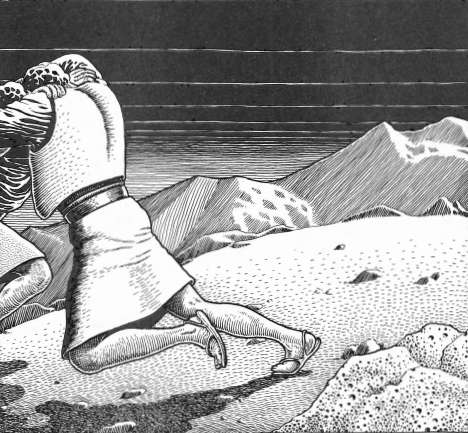
26Then the Man said, “Let Me go, for it is daybreak.” But Jacob replied, “I will not let You go unless You bless me.”
27“What is your name?” the Man asked. “Jacob,” he replied.
28Then the Man said: “Your name will no longer be Jacob, but Israel, because you have struggled with God and with men, and you have prevailed.”
29And Jacob requested, “Please tell me Your name.” But He replied, “Why do you ask My name?” Then He blessed Jacob there.
30So Jacob named the place Peniel, saying, “Indeed, I have seen God face to face, and yet my life was spared.”
31The sun rose above him as he passed by Penuel, and he was limping because of his hip. 32(Therefore to this day the Israelites do not eat the tendon attached to the socket of the hip, because the socket of Jacob’s hip was struck near that tendon.)
Genesis 32:26–32 Commentary
From Jacob to Israel — Striving, Not Scheming:
The divine wrestler asks his name, and the patriarch confesses his true identity: Jacob (the heel-catcher and supplanter). In Genesis 32:28, the divine Person declares: "Your name will no longer be Jacob, but Israel, because you have struggled with God and with men, and have prevailed." The name Israel fuses the Hebrew verb sarah (meaning to strive, contend, or persist) with El (God) — signifying "he strives with God" or "God strives." Clinging to God in relentless faith, rather than relying on fleshly manipulation, becomes his new covenant identity. Jacob didn’t "prevail" by pinning his divine opponent; he prevailed because even with a dislocated hip socket, he refused to let go, crying out: "I will not let you go unless you bless me!" He conquered through absolute, surrendered dependency.
Jacob Saw the Word, Not the Father:
Jacob marvels that he saw God face to face and lived (Genesis 32:30), yet nearly five centuries later Moses would record at Mount Sinai that no man can see God’s face and live (Exodus 33:20), and two millennia later the Apostle John in the Gospels would affirm that no one has ever seen God (John 1:18). Both statements are true because they’re about different Persons. No one has seen the Father. The One people see, the One Jacob wrestled, is the Word, the Son who makes the Father known. That is the identical pattern seen fourteen chapters earlier with Abraham under the oaks of Mamre back in Genesis 18, and it is why Jacob can gaze upon God and still walk away alive.
Genesis 32:1–8 Commentary
Mahanaim — God’s Army Meets Jacob’s Two Camps:
Before the bad news about Esau arrives, verses 1–2 (Genesis 32:1–2) give Jacob something else entirely: the angels of God meet him, and he says, “This is the camp of God,” and names the place Mahanaim. Mahanaim is a dual form, “two camps,” and the next verses show why the name fits. When Jacob hears Esau is coming with four hundred men, he divides his own household into two camps (Genesis 32:7–8). The text sets the host of God’s camp beside Jacob’s frightened camp. Nearly a thousand years later during the era of the kings, King David would articulate this exact principle in Psalm 34:7: the Angel of YAHWEH encamps around those who fear Him. Jacob is about to face his brother, and the host of heaven has already shown up on his road. Twenty years and a massive household later, Jacob still has to face the one crisis he never actually resolved: his brother Esau.
Jacob Takes the Initiative to Reconcile With Esau:
Ever since the stolen blessing five chapters earlier back in Genesis 27:41, Esau had spent twenty long years nursing a burning grudge after Jacob walked away with both the birthright and Isaac’s blessing. Jacob is marching straight back into that unresolved family crisis, so he sends diplomatic emissaries ahead His messengers rush back with terrifying intelligence: Esau is riding out to meet him with four hundred hardened men — a mobile strike force that looks like an army bent on vengeance.
Four Hundred Men Isn’t a Welcoming Committee:
Esau’s four hundred mounted men form a fast-moving private militia, not a friendly greeting party. It is roughly the same size as the guerrilla band David would lead nearly a thousand years later in 1 Samuel 22:2—a formidable force big enough to pose an existential military threat. Splitting his family into two camps isn’t clever management; it’s a grim calculation of survival percentages.