Genesis 11
1Now the whole world had one language and a common form of speech. 2And as people journeyed eastward, they found a plain in the land of Shinar and settled there.
3And they said to one another, “Come, let us make bricks and bake them thoroughly.” So they used brick instead of stone, and tar instead of mortar.
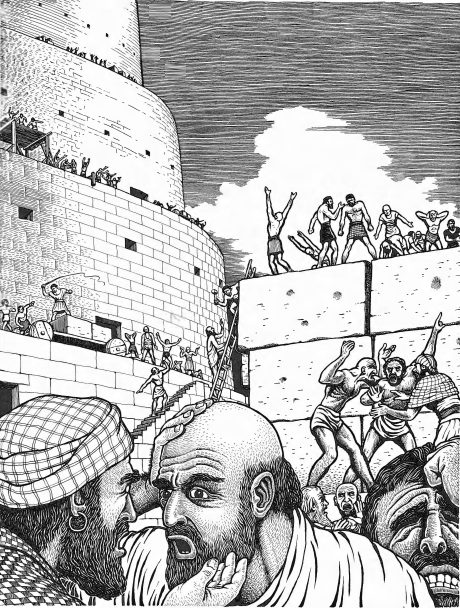
4“Come,” they said, “let us build for ourselves a city with a tower that reaches to the heavens, that we may make a name for ourselves and not be scattered over the face of all the earth.”
Genesis 11:3–4 Commentary
Mankind Organizes to Glorify Man, Not God:
One common language meant ideas spread without friction, allowing a concentrated population pooling its technology to advance rapidly. That centralized power was pointed straight into open rebellion. Their declaration in Genesis 11:4, “Come, let us build for ourselves a city with a tower that reaches to the heavens, that we may make a name for ourselves” represents naked self-exaltation — human arrogance formally organized against the Creator.
Nimrod Built Babel — Josephus Names the Architect:
As recorded one chapter earlier in Genesis 10:10, Nimrod’s kingdom began in Babel, in the land of Shinar, and Genesis 11:2 places the tower in that identical region. The Jewish historian Josephus (Antiquities 1.4.2) records the ancient tradition that Nimrod was the driving tyrant behind the tower project, inciting humanity to build a monument of defiance against God. The rebellion at Babel was organized tyranny, not an innocent architectural endeavor.
Bricks Aren’t Evil — the Builders’ Spirit Is:
The physical brick and bitumen carried no inherent guilt here. In the ancient Near East, the phrase "making a name" (as proclaimed in Genesis 11:4) was political and religious code for consolidating centralized power to dominate humanity. Architectural technology is not evil in itself; the spirit driving the builders was the guilty party — the identical spirit of defiance seen today whenever men erect monuments to their own glory instead of altars to God.
Babel Was Built as a “Gate of the Gods”:
The phrase in Genesis 11:4, “a tower that reaches to the heavens” uses the exact architectural vocabulary of a Mesopotamian ziggurat — a tiered temple-tower engineered as a cosmic stairway to lure pagan deities down to earth. In Akkadian, the proud name Babylon is Bab-ili, meaning “gate of the gods.”
5Then YAHWEH came down to see the city and the tower that the sons of men were building. 6And YAHWEH said: “If they have begun to do this as one people speaking the same language, then nothing they devise will be beyond them. 7Come, let Us go down and confuse their language, so that they will not understand one another’s speech.”
Genesis 11:5–7 Commentary
‘Coming Down’ Is God’s Legal Signal for Judgment:
God “comes down” to look at the city and the tower — the same descending judicial language will show back up seven chapters ahead in Genesis 18:21 when God comes down to investigate Sodom. Throughout the broader biblical record, whenever God “comes down,” it marks direct divine intervention — whether executing judgment on a corrupt culture as later seen in Sodom and the prophets (Genesis 18:21; Isaiah 31:4) or intervening over eight centuries later during the Exodus to rescue His people (Exodus 3:8). This is serious language: God personally and directly engaging the affairs of men instead of ruling from a distance on hearsay.
“Let Us Go Down” Echoes the Plural Godhead:
“Come, let Us go down and confuse their language” carries the same plural structure already stamped on Genesis 1:26 and Genesis 3:22 — the Father speaking together with the Word, two distinct divine Persons acting in total unity, the same conversation running inside the Godhead since before day one of creation. Skate past this plural language every time it shows up and you risk missing what Genesis has been building toward since Genesis 1:1.
Babel’s Fake ‘Oneness’ Parodies the Godhead:
Notice the dark parody in Genesis 11:6: mankind becomes “one” — a twisted, rebellious counterfeit of the true plurality-in-unity found eternally within YAHWEH Himself. Genuine divine unity is the perfect, holy harmony between the Father and the Word, acting together in righteous love and shared purpose. Babel took that sacred reality of oneness and distorted it into an ungodly human collective, weaponized for an all-out mutiny against heaven.
God Throttles Runaway Technology at Babel:
Beyond the theological judgment, consider a practical angle: left unchecked, a rebellious humanity would have built weapons of mass destruction thousands of years ahead of schedule — God tapping the brakes to keep us from wiping ourselves out before His timeline allowed.
8So YAHWEH scattered them from there over the face of all the earth, and they stopped building the city. 9(That is why it is called Babel, for there YAHWEH confused the language of the whole world, and from that place YAHWEH scattered them over the face of all the earth.)
Genesis 11:8–9 Commentary
Babel Means Confusion — the Name Sticks Forever:
The languages fracture, the population scatters, and the monument to human pride stops dead on the spot.
Echoes of the Flood Preserved in Every Culture:
As humanity dispersed carrying fragmented memories of the same recent catastrophe, each scattered people preserved its own account of the cataclysm. That worldwide pattern — on nearly every continent, among peoples with zero later contact with each other — reads far more naturally as scattered echoes of one real, shared event than as coincidence. Scripture, preserved through Moses under inspiration, keeps the accurate account. Everything else is a distorted copy of the same original memory.
Deuteronomy 32:8 — The Nations Apportioned to Divine Sons:
Genesis tells you the nations scattered; over eight centuries later on the plains of Moab, Moses in Deuteronomy pulls back the curtain to show you the cosmic judgment behind it. Down the corridor of Israel's journey, Deuteronomy 32:8–9 reveals that when the Most High gave the nations their inheritance and divided mankind, He fixed their boundaries according to the number of the sons of God. That reading is preserved in the oldest biblical manuscripts — the Dead Sea Scrolls (4QDeut^q) and the Septuagint (LXX) — whereas the later medieval Masoretic Text altered the phrase to “sons of Israel,” an obvious copyist anachronism since Israel did not yet exist as a nation at Babel. While Genesis 10 previously cataloged seventy primary Gentile nations, Deuteronomy 32:8 would later reveal that humanity was divided and apportioned according to the number of created divine sons (bene Elohim). While Scripture lists seventy primary nations at Babel, it does not state that there were exactly seventy individual divine sons; rather, the scattered nations were divided and placed under the jurisdiction of an unknown number of these assigned celestial rulers.
YAHWEH’s Portion — Disinheriting Babel to Birth Israel:
In Deuteronomy 32:9, Moses delivers the theological punchline to the Babel judgment: “For YAHWEH’s portion is His people; Jacob is the place of His inheritance.” While Genesis 11:9 records the physical scattering of human language and civilization across the earth, Deuteronomy reveals the devastating spiritual reality behind it: the Gentile nations were legally disinherited by God and handed over to the jurisdiction of subordinate celestial beings. YAHWEH abandoned those rebellious nations to their chosen idolatry, reserving one people exclusively for Himself — a holy nation He was about to birth from scratch through Abram starting in the very next chapter (Genesis 12). Over eight centuries later on the plains of Moab, Moses would confirm this exact division from Israel's perspective in Deuteronomy 4:19–20, reminding them that YAHWEH allotted the host of heaven to all the other peoples under heaven, but brought Israel out of Egypt to be His own inheritance. Babel was not merely a linguistic scramble; it was God’s judicial abandonment of the rebellious nations — the exact divine handing-over the Apostle Paul would diagnose millennia later in Romans 1:24–28. And because those assigned celestial rulers turned rogue and accepted illicit worship, Moses would record in that same farewell address (Deuteronomy 32:17) that the nations ended up sacrificing to demons (shedim), gods they had never known.
Psalm 82 — Corrupt Spirit Rulers Sentenced to Die:
Those divine sons assigned to govern the nations did not remain faithful servants; they demanded worship for themselves and ruled the Gentile world corruptly. Over a thousand years down the corridor of Israel's history, Psalm 82 documents God taking His stand in the Divine Council (adat-El), right in the midst of these ruling elohim, and issuing a devastating indictment: “How long will you judge unjustly and show partiality to the wicked?” (Psalm 82:1–2). Rather than upholding righteousness, they neglected the fatherless, the poor, and the oppressed, causing “all the foundations of the earth” to be shaken by their lawless misrule (Psalm 82:3–5). Because they rebelled, the Most High passes a sentence of unprecedented cosmic justice: “I said, ‘You are gods, and all of you are sons of the Most High; but you shall die like men, and fall like one of the princes’” (Psalm 82:6–7). Spiritual beings originally created immortal are sentenced to physical death and destruction for their treason! Nearly two millennia later in the Persian era, Daniel 10 reveals these fallen divine sons still entrenched as territorial overlords — the spiritual “prince of Persia” and “prince of Greece” warring against God's messengers, while the archangel Michael stands as the guardian prince of Israel (Daniel 10:13, 21; Jude 1:9).
Yeshua Disarmed Cosmic Powers and Reclaimed the Nations:
Psalm 82 concludes with the great prophetic plea that points forward straight to the Messiah: “Arise, O God, judge the earth, for all the nations are Your inheritance” (Psalm 82:8). Babel scattered humanity under corrupt spiritual rulers, but Yeshua the Messiah came to strip those powers of their authority and reclaim every nation on earth. He dealt the decisive death blow to their dominion at the cross. Looking across more than two millennia to that ultimate victory, the Apostle Paul in Colossians 2:14–15 reveals that by wiping out our certificate of debt through His sacrifice, Yeshua “disarmed the rulers and authorities and put them to open shame, triumphing over them by the cross.”
The Certificate of Debt Nailed to the Cross:
In the ancient legal world, this debt record stood as an indictment against the sinner. It was not God's righteous Law that was nailed to the cross, but our personal record of debt — the death penalty we owed for breaking it! As the apostolic writings would formulate millennia later, Scripture defines sin as the transgression of the Law (1 John 3:4), and declares that “the wages of sin is death” (Romans 6:23). That death penalty was the insurmountable debt hanging over every human being. Because Satan and these rebel divine sons held humanity captive through the legal guilt of our sins and the terrifying power of death (as Hebrews 2:14–15 explains), in the fullness of time Yeshua stepped forward as our atoning sacrifice — the true Passover Lamb slain for us (1 Corinthians 5:7). By shedding His own sinless blood, Yeshua paid the full capital debt that we owed. He took the handwritten decree of our condemnation — the death penalty for our transgressions — and nailed that certificate of debt to the cross! Having completely satisfied the legal claim of the Law on our behalf, Yeshua stripped the cosmic rulers of their leverage, shattered their jurisdiction, and made an open spectacle of their defeat. Through His death and triumphant resurrection at the climax of the Gospels, Yeshua proclaimed His total victory across the spiritual realm (1 Peter 3:18–19) and declared that all authority in heaven and on earth has been delivered into His hands (Matthew 28:18)—initiating the great reclamation of the nations.
Shavuot — God’s Appointed Time Reverses Babel’s Division:
Millennia later in the New Testament record, Acts 2:1–13 ties directly back to Babel for a profound theological reason. Pentecost (known in Hebrew as Shavuot, the Feast of Weeks) is not a new ecclesiastical invention; it is one of God’s official Appointed Times (mo’adim) that would be codified over eight centuries later at Mount Sinai in Leviticus 23:15–21. At Babel, God confused the languages and disinherited the nations. When that Appointed Time of Pentecost arrived in the apostolic era, the Holy Spirit descended and devout men “from every nation under heaven” (Acts 2:5) each heard the good news of God's mighty works in their own native tongues (Acts 2:6–11). What scattered by tongues at Babel now begins to be gathered by tongues under the Spirit.
Seventy Disciples Sent to Reclaim the Seventy Nations:
Look at the pilgrim catalog more than two millennia later in Acts 2:9–11 and you will find the Table of Nations from Genesis 10 reappearing in Jerusalem: Medes (Madai, Genesis 10:2), Elamites (Elam, Genesis 10:22), and Mesopotamia. It also connects directly to the seventy: during His earthly ministry in Luke 10:1 (preserved in the Majority Text), Yeshua sends out seventy disciples, corresponding exactly to the seventy nations cataloged earlier in Genesis 10 — a deliberate prophetic advance notice of the global reclamation launched at Pentecost. Babel divided the nations among rebellious divine sons; centuries later, Pentecost, as an ordained mo'ed, would mark YAHWEH’s first major strike to reclaim humanity for His Kingdom, culminating in the future Millennial reign when He restores a pure language to all peoples as foretold in Zephaniah 3:9.
Glorified Saints Reclaim the Nations at Messiah's Return:
This is where the entire cosmic narrative comes full circle: the nations handed away to the rebellious sons of God at Babel come back to Yeshua and His redeemed saints in the Millennial Kingdom. Redeemed human believers — begotten as the new sons of God through the Holy Spirit — become co-heirs with Yeshua over the reclaimed nations. As the Apostle Paul would proclaim millennia later to the Corinthians, “Do you not know that we will judge angels?” (1 Corinthians 6:3). The corrupt spiritual powers who deceived the nations will answer to the very human family they sought to destroy, and the dominion Adam lost in Eden is restored to glorified sons and daughters who will never lose it again.
10This is the account of Shem. Two years after the flood, when Shem was 100 years old, he became the father of Arphaxad. 11And after he had become the father of Arphaxad, Shem lived 500 years and had other sons and daughters.
12When Arphaxad was 35 years old, he became the father of Shelah. 13And after he had become the father of Shelah, Arphaxad lived 403 years and had other sons and daughters.
14When Shelah was 30 years old, he became the father of Eber. 15And after he had become the father of Eber, Shelah lived 403 years and had other sons and daughters.
16When Eber was 34 years old, he became the father of Peleg. 17And after he had become the father of Peleg, Eber lived 430 years and had other sons and daughters.
18When Peleg was 30 years old, he became the father of Reu. 19And after he had become the father of Reu, Peleg lived 209 years and had other sons and daughters.
20When Reu was 32 years old, he became the father of Serug. 21And after he had become the father of Serug, Reu lived 207 years and had other sons and daughters.
22When Serug was 30 years old, he became the father of Nahor. 23And after he had become the father of Nahor, Serug lived 200 years and had other sons and daughters.
24When Nahor was 29 years old, he became the father of Terah. 25And after he had become the father of Terah, Nahor lived 119 years and had other sons and daughters.
26When Terah was 70 years old, he became the father of Abram, Nahor, and Haran.
Genesis 11:10–26 Commentary
Shem’s Line Tracks a Dying Post-Flood World:
This toledot picks up right where Genesis 5 left off before the Flood, running the righteous line forward from Shem to Terah and Abram. Track the numbers: lifespans plummet generation after generation — a dying world running out the clock. The years taper steadily toward the hundred-and-twenty-year figure mentioned five chapters earlier in Genesis 6:3. If that number refers to a shortening human lifespan rather than a pre-Flood countdown, this genealogy shows it playing out before your eyes. Whatever combination of divine limitation, environmental collapse, or loss of the pre-Flood canopy drove that decline, Moses recorded the physical toll line by line.
Abram’s Father Was an Idolater — the Call Begins:
Terah, Abram’s father, gets introduced at the tail end of it, and over seven centuries down the road during the conquest of Canaan, Joshua 24:2 tells you flat out what kind of household Abram grew up in: “Your fathers lived beyond the Euphrates in old time… and they served other gods.” Terah chose idolatry — ordinary human idolatry, the default condition humanity drifts toward the second it stops fixing its eyes on the Creator and starts worshiping His creation instead.
Ur and Haran — Steeped in Moon-God Worship:
As Joshua would remind Israel over seven centuries later across the Jordan in Joshua 24:2, Terah’s family served other gods beyond the River, and the secular archaeological history backs it up completely. Ur’s great god was Nanna, the moon god, whose temple-tower stood at the center of the city, and Haran, where Terah settled, was a major center of the same moon worship under the name Sin. So when God calls Abram out of Ur and later out of Haran, He is calling him out of the home turf of the astral gods — the sun, moon, and stars that Moses would record on the plains of Moab in Deuteronomy 4:19 as having been apportioned to the nations. Abram’s family didn’t just have an idol problem. They lived inside the system Babel produced.
27This is the account of Terah. Terah became the father of Abram, Nahor, and Haran. And Haran became the father of Lot. 28During his father Terah’s lifetime, Haran died in his native land, in Ur of the Chaldeans.
29And Abram and Nahor took wives for themselves. Abram’s wife was named Sarai, and Nahor’s wife was named Milcah; she was the daughter of Haran, who was the father of both Milcah and Iscah.
Genesis 11:27–29 Commentary
Sarai Was Abram’s Half-Sister — Keep That in Mind:
Sarai is introduced as Abram’s wife, and nine chapters ahead, Genesis 20:12 spells out the relationship in Abram’s own words: “she is indeed my sister, the daughter of my father, though not the daughter of my mother.” Sharing the same father, Terah, this family dynamic becomes critical context before the “she is my sister” episodes that follow.
30But Sarai was barren; she had no children.
31And Terah took his son Abram, his grandson Lot son of Haran, and his daughter-in-law Sarai the wife of Abram, and they set out from Ur of the Chaldeans for the land of Canaan. But when they arrived in Haran, they settled there. 32Terah lived 205 years, and he died in Haran.
Genesis 11:30–32 Commentary
Barrenness Sets Up the Coming Covenant Promise:
Sarai is barren, a detail Moses drops deliberately right before God’s covenant promises kick off. In the ancient Near East, barrenness carried enormous social weight — a mark of disgrace or divine disfavor. By establishing her barrenness first, Scripture ensures that when the covenant promise of a nation comes to pass, it will be recognized as an undeniable, supernatural work of God rather than human achievement.
Genesis 11:1–2 Commentary
One Language Dies at Babel — but Returns Later:
The whole earth still shares one language and one set of words. Over fifteen centuries later, the prophet Zephaniah would declare that in the coming Kingdom, God “restore pure lips to the peoples, that all may call upon the name of YAHWEH” (Zephaniah 3:9) — a direct, deliberate reversal of what happens here at Babel. Man corrupts it. God restores it. That’s the whole pattern of Scripture in one sentence.
Rebellion Rises Where It First Began:
Humanity settles in Shinar, the same region tied to ancient Babylon and sitting near the traditional location of Eden itself. Rebellion doesn’t need new real estate.