Genesis 44
1Then Joseph instructed his steward: “Fill the men’s sacks with as much food as they can carry, and put each one’s silver in the mouth of his sack. 2Put my cup, the silver one, in the mouth of the youngest one’s sack, along with the silver for his grain.” So the steward did as Joseph had instructed.
3At daybreak, the men were sent on their way with their donkeys. 4They had not gone far from the city when Joseph told his steward, “Pursue the men at once, and when you overtake them, ask, ‘Why have all of you repaid good with evil? 5Is this not the cup my master drinks from and uses for divination? What you have done is wicked!’”
Genesis 44:3–5 Commentary
Sent Off at Daybreak Before the Trap Snaps Shut:
The brothers are sent off at first light, the standard travel practice in the ancient Near East to beat the scorching midday heat — a custom still on display nearly two millennia later when the Apostle Paul set out at dawn in Acts 20:7–11. The brothers leave relieved and completely unsuspecting, but they have barely cleared the city gates before Joseph orders his steward into hot pursuit. The timing is calculated: let them think they made it out clean before springing the trap.
Occult Claims Are Part of Joseph’s Cover:
Joseph’s silver goblet was the kind of ornate vessel Egyptian courtiers associated with hydromancy — pagan water-divination — but Scripture gives zero ground to suspect Joseph dabbled in the occult. He had already gone on record — first in prison and then before Pharaoh himself — declaring that supernatural interpretation belongs to the Almighty alone (Genesis 40:8; 41:16). Flaunting the cup as a divination tool was part of his rigorous royal cover story, adopting the menacing persona of an Egyptian grand vizier to push his brothers to a genuine moral test.
6When the steward overtook them, he relayed these words to them.
7“Why does my lord say these things?” they asked. “Your servants could not possibly do such a thing. 8We even brought back to you from the land of Canaan the silver we found in the mouths of our sacks. Why would we steal silver or gold from your master’s house? 9If any of your servants is found to have it, he must die, and the rest will become slaves of my lord.”
10“As you say,” replied the steward. “But only the one who is found with the cup will be my slave, and the rest of you shall be free of blame.”
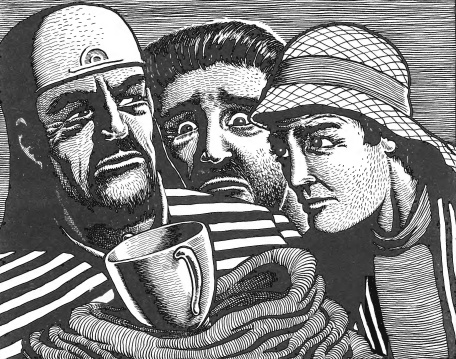
11So each one quickly lowered his sack to the ground and opened it. 12The steward searched, beginning with the oldest and ending with the youngest—and the cup was found in Benjamin’s sack.
Genesis 44:6–12 Commentary
The Brothers Pledge Their Lives in Confident Innocence:
The brothers protest their innocence with complete sincerity. In verse 8 (Genesis 44:8), they appeal to their own track record: they had voluntarily brought back from Canaan the silver they found in their sacks on their first journey. Why would men who returned unearned silver turn around and steal gold or silver from the governor? Confident of their integrity, they make a reckless pledge: whoever has the cup must die, and the rest will become slaves (Genesis 44:9).
The Steward’s Adjustment — A Trap to Test Brotherly Loyalty:
But the steward deliberately adjusts the stakes: only the man caught with the cup will become a slave, while the rest are cleared to go free (Genesis 44:10). That modification is the very hinge of Joseph's trap — it offers the older brothers a guilt-free escape hatch to abandon Rachel's son. The steward prolongs the tension by searching from the oldest down to the youngest, until the silver cup surfaces exactly where it was planted: in Benjamin's sack.
13Then they all tore their clothes, loaded their donkeys, and returned to the city.
14When Judah and his brothers arrived at Joseph’s house, he was still there, and they fell to the ground before him.
15“What is this deed that all of you have done?” Joseph declared. “Did all of you not know that a man like me can surely divine the truth?”
16“What can we say to my lord?” Judah replied. “How can we plead? How can we justify ourselves? God has exposed the iniquity of your servants. We are now my lord’s slaves—both we and the one who was found with the cup.”
17But Joseph replied, “Far be it from me to do this. The man who was found with the cup will be my slave. The rest of you may return to your father in peace.”
Genesis 44:13–17 Commentary
Torn Garments — Cultural Mourning, Not a Command:
The brothers tear their clothes, reflecting the ancient Near Eastern mourning custom already seen seven chapters earlier in Genesis 37:34. This practice was never prescribed by the Almighty, but functioned as a raw emotional outlet recorded without condemnation in later biblical accounts — from Job's grief in Uz to King David's lament over Saul over eight centuries later (compare Job 1:20; 2 Samuel 1:11). While outward rituals of anguish were standard in antiquity, YAHWEH would declare over a millennium later down the prophetic corridor through the prophet Joel that He demands the inward posture of the heart rather than shredded fabric: “So rend your hearts and not your garments” (Joel 2:13).
United at Last — Refusing to Abandon Benjamin:
When Joseph confronts them — again maintaining his Egyptian disguise by claiming powers of divination (Genesis 44:15) — Judah does not argue innocence regarding the cup. Instead, he utters a profound confession: “God has exposed the iniquity of your servants” (Genesis 44:16). Judah knows they are framed regarding the cup, but he recognizes that God is settling the score for selling Joseph into slavery twenty-two years ago. When Joseph offers them an open door to leave Benjamin behind in chains and return home in peace (Genesis 44:17), the brothers flatly refuse. Rather than cutting their losses and saving their own skins — as they once did at the pit in Dothan — they stand resolutely at his side. They vividly remember their father's brokenhearted warning before they left Canaan (Genesis 42:36–38) — that losing Benjamin would kill him — and this time, whatever it costs them, they will not let it happen.
18Then Judah approached Joseph and said, “Sir, please let your servant speak personally to my lord. Do not be angry with your servant, for you are equal to Pharaoh himself. 19My lord asked his servants, ‘Do all of you have a father or a brother?’
20And we answered, ‘We have an elderly father and a younger brother, the child of his old age. The boy’s brother is dead. He is the only one of his mother’s sons left, and his father loves him.’”
Genesis 44:18–20 Commentary
Judah Pleads Before Egypt’s Supreme Viceroy:
Judah approaches Joseph carefully, addressing him as one “like Pharaoh” — acknowledging the absolute imperial authority Pharaoh had invested in him back in Genesis 41:42–44 — and recounts the family’s situation: an aged father, a brother “dead,” as they still believe, and a youngest son whose loss would destroy the old man.
21“Then you told your servants, ‘Bring him down to me, all of you, so that I can see him for myself.’
22So we said to my lord, ‘The boy cannot leave his father. If he were to leave, his father would die.’
23But you said to your servants, ‘Unless your younger brother comes down with all of you, you will not see my face again.’
24Now when we returned to your servant my father, we relayed your words to him.
25Then our father said, ‘Go back and buy us some food.’
26But we answered, ‘We cannot go down there unless our younger brother goes with us. So if our younger brother is not with us, we cannot see the man.’
27And your servant my father said to us, ‘You know that my wife bore me two sons. 28When one of them was gone, I said: “Surely he has been torn to pieces.” And I have not seen him since. 29Now if all of you also take this one from me and harm comes to him, you all will bring my gray hair down to Sheol in sorrow.’”
Genesis 44:21–29 Commentary
Judah Recalls Jacob’s Words on Sheol to Joseph:
Judah recounts the entire agonizing history (Genesis 44:21–26), showing Joseph that Benjamin was brought to Egypt only under severe duress. He then quotes their father’s heartbreaking words directly: “You know that my wife bore me two sons” (Genesis 44:27) — Rachel being Jacob’s beloved. Judah repeats Jacob’s fear that losing Benjamin would bring his gray hair down to Sheol in sorrow (Genesis 44:29). From the patriarchs forward nearly a thousand years to Solomon's wisdom during the monarchy (Ecclesiastes 9:5, 10; 12:7) and nearly two millennia down the road to the Apostle Paul's resurrection epistles (1 Corinthians 15:51–54; 1 Thessalonians 4:16–17), Scripture consistently teaches that Sheol is the physical grave and realm of the unconscious dead awaiting the resurrection, never a pagan underworld of conscious torment.
30“So if the boy is not with us when I return to your servant, and if my father, whose life is wrapped up in the boy’s life, 31sees that the boy is not with us, he will die. Then your servants will have brought the gray hair of your servant our father down to Sheol in sorrow. 32Indeed, your servant guaranteed the boy’s safety to my father, saying, ‘If I do not return him to you, I will bear the guilt before you, my father, all my life.’
33Now please let your servant stay here as my lord’s slave in place of the boy. Let him return with his brothers.
34For how can I go back to my father without the boy? I could not bear to see the misery that would overwhelm him.”
Genesis 44:30–34 Commentary
Judah Offers Himself as a Slave in Benjamin’s Place:
Judah reminds Joseph that he personally guaranteed Benjamin’s safe return (Genesis 44:30–32), and then takes a step unmatched by anyone in this family throughout Genesis: he asks to remain as a slave in Benjamin’s place so the boy can go home to his father (Genesis 44:33). Over four centuries down the road at Mount Sinai, Moses will make that same desperate offer to God on Israel’s behalf after the golden calf — “if You would only forgive their sin.... But if not, please blot me out of the book that You have written” (Exodus 32:32) — and nearly two millennia later, Judah’s own royal lineage will produce a far greater Substitute who did not merely offer, but actually laid down His life.
Judah’s Transformation From Slave Seller to Willing Substitute:
This is the same man who sold his brother into slavery for silver, now willing to become a slave himself to spare his father and save Rachel’s remaining son. The turning point in Judah's life began six chapters earlier with Tamar back in Genesis 38:26, when he was forced to confess that she was more righteous than he was — and that moral awakening reaches its absolute zenith right here.
Genesis 44:1–2 Commentary
Nothing About the Planted Cup Is Accidental:
Joseph again orders his steward to secretly return the brothers’ grain money to their sacks, but this time he adds his personal silver cup into Benjamin’s sack. This sting operation is engineered from the ground up to force a life-or-death choice: will the ten older brothers abandon Rachel’s remaining son to Egyptian slavery to save their own skins, or will they stand and defend him?